20 January 2026
  Marten Angner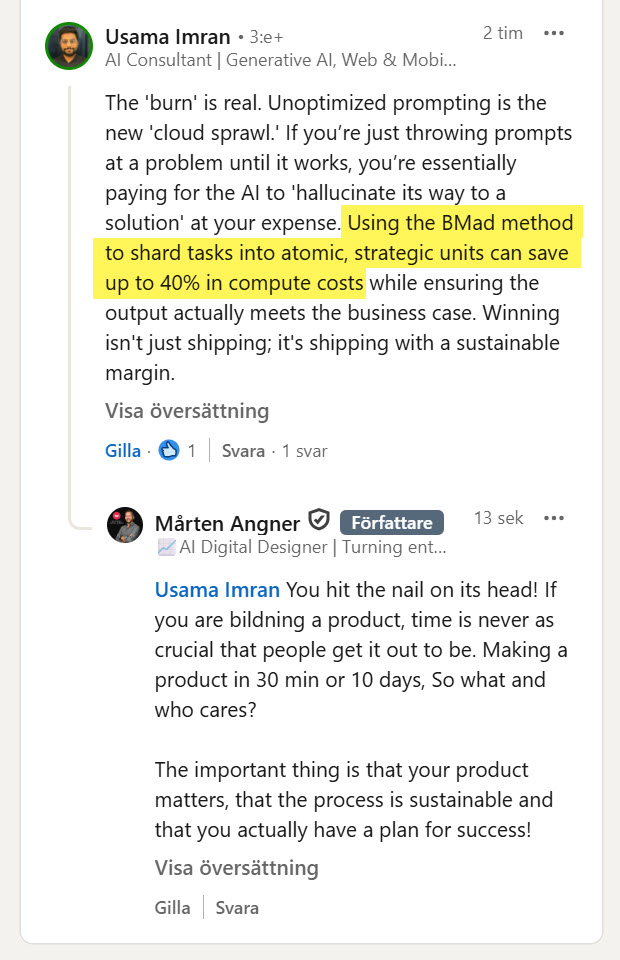
“Prompt and burn” The new way we waste hard earned money for useless things and stay ignorant! Not thinking before you make things is a new kind of waste creeping into digital projects, and it sounds productive. Under the gies of release fast, we act reckless while the AI companies line their pockets!
You know the pattern: someone “just tests a few things” in an AI tool. Throws in more prompts. Iterates. Changes angle. Tries again. Eventually something looks right. Everyone’s happy.
Then reality arrives.
Requirements shift. The solution doesn’t hang together. The output was polished but not true. So you spin up the next round of prompts, and the next, and the next.
That’s prompt burn.
And it’s the same old villain in a new costume: scope creep, cloud sprawl, “just one more feature,” or the classic: “we’ll fix it next sprint.”
The difference now is that the waste feels creative and fast.
On the invoice, it’s still waste.
The problem isn’t that AI is expensive, it’s that the workflow becomes expensive
When prompting is unstructured, you often pay for three things at once:
- Compute: tokens burned, reruns, retries.
- Interpretation: human time spent figuring out what the AI actually meant.
- Rework: project cost when output doesn’t match business logic, user flows, or technical constraints.
That’s how teams end up in a paradox: it’s fast to get something, but slow to get something right.
BMAD: break work into atomic strategic units so AI can behave like a grown-up colleague
At its core, the BMAD method is the opposite of “prompt-and-pray.”
Instead of tossing a big fuzzy problem into a chat window, you break it down into atomic, strategic units that have:
- a clear purpose
- clear context
- a clear output
- clear quality criteria
It sounds simple, but the effect is brutal: AI gets the conditions it needs to deliver consistently, and you stop paying for it to hallucinate its way to a solution.
And when work is structured into reusable units, you can reuse them.
You get a system, not a one-off demo.
WDS: Whiteboard Design Studio makes the method practical
BMAD becomes truly powerful when it’s not just a concept, but a flow.
Whiteboard Design Studio (WDS) is the framework that takes you from:
intention → strategy → specification → execution
…without losing the human in the middle.
That means design teams don’t have to choose between “we shipped” and “it’s good.” You still work with goals, audience, priorities, and concepts, but you do it with an AI agent setup that:
- asks the right questions in the right order
- helps you make choices that actually connect
- produces artifacts (briefs, specs, scenarios, requirements, copy frameworks) that teams can build from
The result: you move time from rework to direction.
There’s a little lie that still lives in tech: that speed alone wins.
But building a product in 30 minutes or 10 days often matters less than people want to believe.
What matters is:
- the product solves the right problem
- the team has a plan for success (not just a sprint plan)
- the process and budget are sustainable
- you can keep delivering without burning the team out or restarting every other week
WDS + BMAD is built for that.
Not for the demo.
For reality.
Okay, but how does it actually save time and money?
Here are the three most common ways cost drops:
1) Fewer do-overs
When intention, goals, and constraints are clear early, you avoid “build it twice” later.
2) Less prompt wear-and-tear
You work with reusable building blocks instead of reinventing the wheel in every new chat.
3) Better design–dev collaboration
Clear, connected specifications reduce friction, misunderstandings, and “we thought you meant…”
The smart choice going forward
If you want AI to save time and money, it’s not enough to “use AI.”
You need a way of working where AI:
- can work in a structured way
- can be checked and steered
- can iterate without chaos
- produces outputs that hold all the way to production
That’s where BMAD and WDS come in.
Want to see what it looks like in practice, and how a design team can go from prompt burn to a sustainable flow?
All the links you need you will find in the comments
///
Hi, I am Mårten, I am the founder of Whiteport, a Digital Agency from Stockholm. We make Apps, sites and E-commerse applications with the help of AI Agents! And we love it. Email me at marten@angner.se or find us on www.whiteport.com